Biafra: Nigeria Lacks War Fighting Military – US Defense Authority
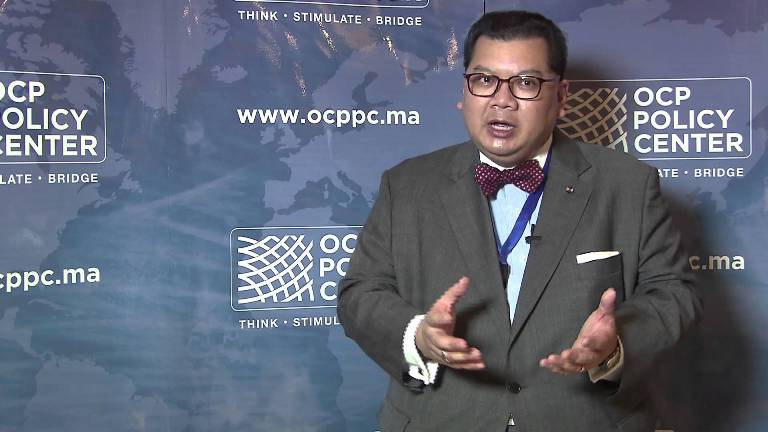
U.S Director of the African Center at the prestigious African Council in Washington, Dr Peter Pham said that Nigeria has failed time and again to effectively beat back the Boko Haram sect wreaking havoc across the country.
“Officials there have tried to shift the blame to Washington, claiming American policies have prevented Nigeria from acquiring the weapons needed to win the fight against extremism. But it turns out the real culprits may have been closer to home.”
But Pham wasn’t so sure. Even if the Nigerian military had acquired the equipment outlined in Dasuki’s alleged phantom contracts, Pham said Nigeria’s poorly trained military might not have known what to do with it.
“You beat a military uprising by war fighting, and, quite simply, they don’t have a war-fighting military,” he said.
Besides Boko Haram, Nigeria is currently confronted by the Biafra self agitation struggle in the South East and South South regions of the country which many experts fear may explode into armed conflict if poorly managed.
According to Buhari — the onetime military leader who beat out former President Goodluck Jonathan in March and took over the presidency in May — Dasuki awarded “phantom contracts” to buy a dozen helicopters, four fighter jets, bombs, and ammunition. None of the equipment or weapons were ever supplied to the military, and he said Dasuki pocketed the money.
Dasuki, the official who arrested Buhari when he was overthrown in a coup the first time he led Nigeria in 1985, has denied all charges.
Pham, an expert on international relations said Wednesday that “there is personal history between the two men.”
For Dasuki to have stolen $2 billion out of a relatively small defense budget would be “getting into an unconscionable amount of corruption,” Pham said.
“I’m not saying that means Sambo Dasuki is innocent, but I don’t believe in coincidences either,” he said.
Two billion dollars may sound like a lot, and for a defense budget of just $6 billion a year, it is.
But even if Dasuki did dip his fingers that deeply into the defense budget, tracking down what he allegedly took may be nothing more than a starting point. Buhari believes roughly $150 billion has been stolen from Nigeria by corrupt officials over the past decade.
In July, when he visited Washington to discuss the fight against Boko Haram, Buhari requested that U.S. President Barack Obama help track down the jaw-dropping amount of money allegedly stolen by corrupt officials. The need to hunt for that much in missing funds is “a testament to how badly Nigeria has been run,” Buhari said.
“I fear that this is a populist substitute for addressing some issues that may be much more unpopular,” he said.
Just like Jonathan’s administration wanted a “magic bullet” to solve Boko Haram, Buhari’s can’t expect arresting a few corrupt officials to solve the root cause of the problem.
Last November, then-Nigerian ambassador to the U.S. Adebowale Ibidapo Adefuye called on the United States to provide more military assistance for the fight against Boko Haram, claiming the United States was only allowing Nigeria to “deliver light jabs to the terrorists when what we need to give them is the killer punch.”
Four months later, roughly two weeks before Buhari ousted Jonathan in the country’s presidential election, top Nigerian military and intelligence officials visited Washington and again blasted the United States for not doing more to help Nigeria fight Boko Haram.
Rear Adm. Gabriel E. Okoi, then-Nigeria’s chief of defense intelligence, said at the time that Nigeria’s friends had “disappointed” them.
The officials were referencing the U.S. Leahy Law, which prevents the Pentagon from providing arms to militaries that have committed egregious human rights violations. Last year, the United States also blocked the sale of an Apache helicopter from Israel, claiming Nigeria did not know how to use the equipment, which further angered officials there.
Meanwhile, Femi Adesina, an advisor to Buhari, seemed to pivot from the American blame game last week, saying instead that if the money allegedly stolen by Dasuki had been spent the way it was intended, “thousands of needless Nigerian deaths would have been avoided.”
J. Peter Pham is Director of the Africa Center at the Atlantic Council in Washington, DC. He previously held an academic appointment as tenured Associate Professor of Justice Studies, Political Science, and Africana Studies at James Madison University in Harrisonburg, Virginia.
An Authority on international relations and strategic issues, with particular concentrations on U.S. foreign and defense policy, African politics and security, terrorism and political violence, and religion and global politics, Dr. Pham has authored of over 300 essays and reviews and is the author, editor, or translator of over a dozen books on these topics. He is frequently invited to testify before the United States Congress and brief senior administration officials and has also served as an adviser to the United Nations, foreign governments, and multinational corporations.


No comments