The Biafran State In 1967
Friday, 22 January 2016
The Biafran State In 1967.
By Okonkwo Isaac Somto
For Family Writers
This is just a brief description of what Biafra looked like during the civil war and I extracted this piece from the book- THERE WAS A COUNTRY- by Chinua Achebe. I would like to say something about the structure of the Biafran state.
By Okonkwo Isaac Somto
For Family Writers
This is just a brief description of what Biafra looked like during the civil war and I extracted this piece from the book- THERE WAS A COUNTRY- by Chinua Achebe. I would like to say something about the structure of the Biafran state.
The Republic of Biafra took its name from the Bight
of Biafra, the vast expanse of water covering the continental shelf into
which the Niger River empties before flowing into the Gulf of Biafra.
After #Biafra's surrender that body of water was renamed the Gulf of
Guinea.
The origins of the word " Biafra" are difficult to trace,
although historical records point to portuguese writings from the
sixteenth century that it may have been derived from. The republic's
capital was initially Enugu, a metropolis of over one hundred thousand
at the time. It was also known as the coal city, a reference to the
nearby Onyeama Coal Mines and other coal deposits that once served as
the fuel that drove a large part of the Nigeria economy.
Enugu was also the old administration capital of the Eastern Region. A well-planned, sedate capital, it had a pleasant climate and the advantages of all the amenities of an important urban Center without the pathologies of a large conurbation. When Enugu fell to the Nigeria Arm on october 4, 1967, the administrative capital of Biafra was moved to Umuahia.
 |
| Chinua Achebe |
Enugu was also the old administration capital of the Eastern Region. A well-planned, sedate capital, it had a pleasant climate and the advantages of all the amenities of an important urban Center without the pathologies of a large conurbation. When Enugu fell to the Nigeria Arm on october 4, 1967, the administrative capital of Biafra was moved to Umuahia.
Following the capture of Umuahia on April 22, 1969, Biafra's
capital was moved once again, to Owerri, the last administrative seat
before the end of the war in January 1970. The population of Biafra in
june 1967 was just under fifteen million people, and it was home to a
large number of ethnic groups in addition to the igbo, who made up about
65 percent of the population. The other major groups were the Efik,
Ibibio, Ijaw and Ikwerre. Others included the Andoni, Agbo, Degema,
Egbema, Eket, Ekoi, Ibeno, Ikom, Iyalla, Kana, Mbembe, Uyanga and Yako.
Biafra was divided initially into eleven administrative provinces with
as many administrators. Later that number was expanded to twenty. Once
secession was declared it became clear that the war effort required a
great deal of military equipment- artillery, planes, boats, tanks, guns,
grenades, mines, bombs, etc. Biafra needed a means to access foreign
exchange and a legal tender for commerce.
One of the first things the
new government did was to establish the Bank of Biafra. The Bank of
Biafra was located in Enugu until the city fell in October 1967, and
then it was moved several times to different locations all over Igbo
land, with the seat of government. The banks first governor was Dr.
Sylvester Ugoh. The legal tender produced by the institution in January
1968 was designed by simon Okeke and othe talented local artists.
The first denominations were the five shilling and one pound notes. About a year later, the ten, five, and one pound as well as the ten and five shilling notes were issued. The currency was widely accepted in Biafra, although it was unavailable in large quantities, which quickly made it a prized possession. Despite its usefulness, it was not a recognised legal tender beyond Biafra's borders and could not be used for foreign exchange.
The first denominations were the five shilling and one pound notes. About a year later, the ten, five, and one pound as well as the ten and five shilling notes were issued. The currency was widely accepted in Biafra, although it was unavailable in large quantities, which quickly made it a prized possession. Despite its usefulness, it was not a recognised legal tender beyond Biafra's borders and could not be used for foreign exchange.
This dilemma produced a number of challenges for
the Biafran government, which, we were told, used private bank accounts
of wealthy Biafrans to perform transactions abroad. To know more on the
Biafra state and the civil war get the book- THERE WAS A COUNTRY- A
personal history of Biafra by CHINUA ACHEBE, this book contains true
facts that took place during the civil war and you will also discover
that the British-Nigeria lied about a lot of things. Biafra is here once
again, and this time it has taken a new form and direction with our
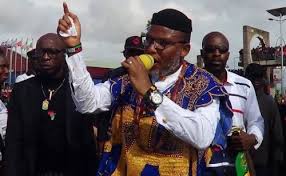
leader Nnamdi Kanu. Nnamdi Kanu has made sure Biafra becomes more
formidable and eminent.
Biafra has come and there is nothing the British-Nigeria government can do about it. Killing us will not stop Biafra, threatening us will not stop Biafra, conspiring against us will not stop Biafra, arresting Nnamdi Kanu will not stop Biafra because Biafra is a spirit that lives in every Biafrans and Biafra will continue to rise, until the United State Of Biafra is formed. #freennamdikanu #freebiafra
Biafra has come and there is nothing the British-Nigeria government can do about it. Killing us will not stop Biafra, threatening us will not stop Biafra, conspiring against us will not stop Biafra, arresting Nnamdi Kanu will not stop Biafra because Biafra is a spirit that lives in every Biafrans and Biafra will continue to rise, until the United State Of Biafra is formed. #freennamdikanu #freebiafra


No comments